
Between Eras
A Study in Continuity and Adaptation
Context
Homes that have evolved over a century often carry layers of architectural intent, compromise, and deterioration. Built in 1905 and added onto over time, this residence reflected that reality. The kitchen, in particular, had lost clarity through years of piecemeal changes, resulting in a space that neither honored the home’s origins nor supported the way it was now used.
As a second home intended for large family gatherings, the kitchen needed to function as a central anchor, not just a utilitarian room. The challenge was to create a space that felt rooted in the home’s history while accommodating contemporary scale and use.
The Core Problem
Renovating a historic kitchen of this size introduces a dual risk: preserving too much and inheriting dysfunction, or modernizing too aggressively and erasing character.
The central tension lay in reconciling scale with continuity. A kitchen large enough to host extended family gatherings could easily overpower the house if not handled with restraint. The question became how to design a space that felt generous without feeling imposed, and modern without feeling disconnected from its architectural context.
The Design Position
This project was guided by the belief that historic homes should evolve through alignment rather than imitation.
Rather than recreating period details or inserting overtly modern statements, the design focused on restoring clarity to the floor plan and allowing proportion, circulation, and material discipline to bridge past and present. The kitchen would feel inevitable within the home, as though it had always been meant to exist in this form.
Key Design Decisions
1. The kitchen would be fully restructured.
A complete gut renovation allowed the space to be reimagined without inheriting the inefficiencies of previous layouts, establishing a clear organizational logic.
2. Scale would be addressed through proportion, not fragmentation.
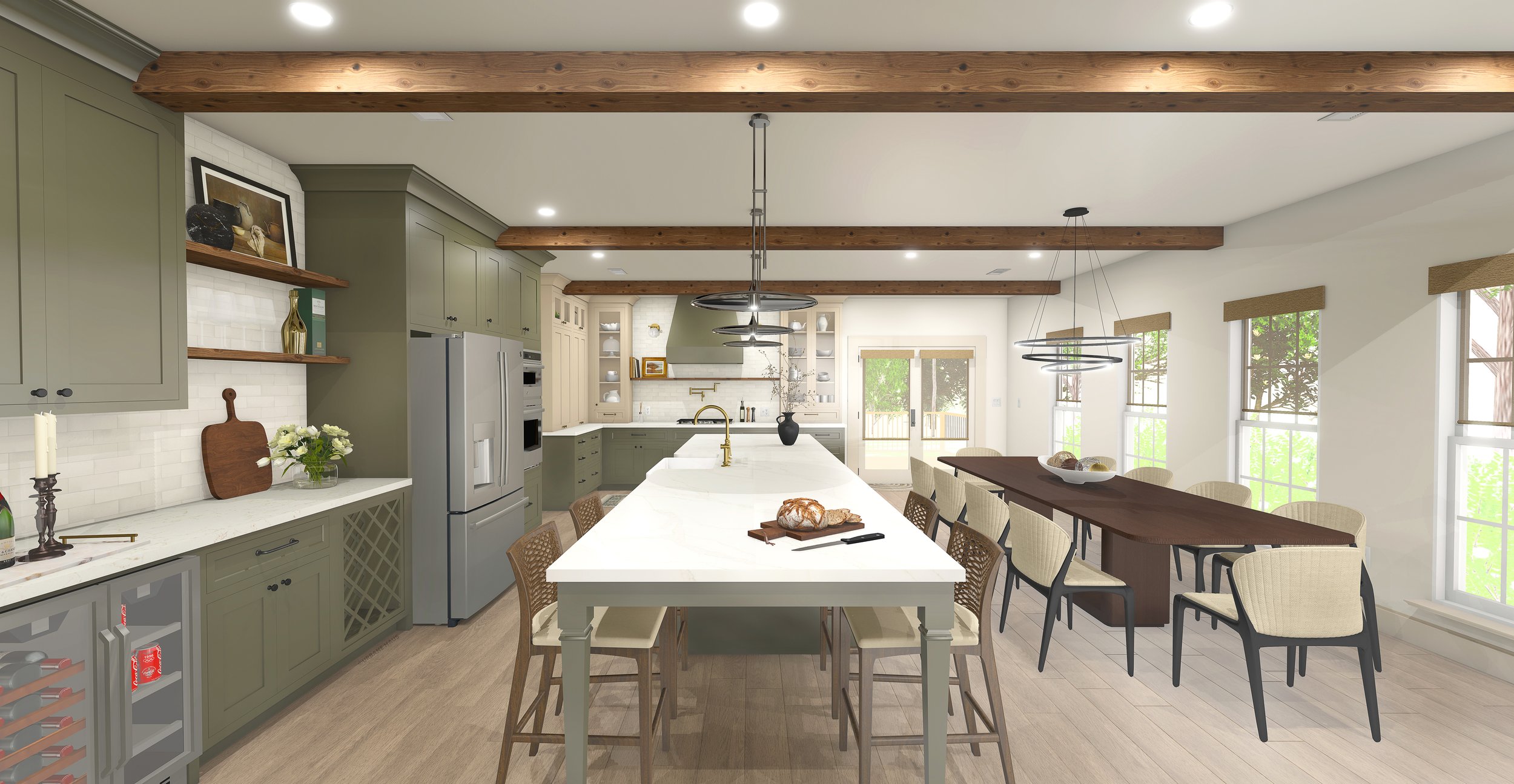
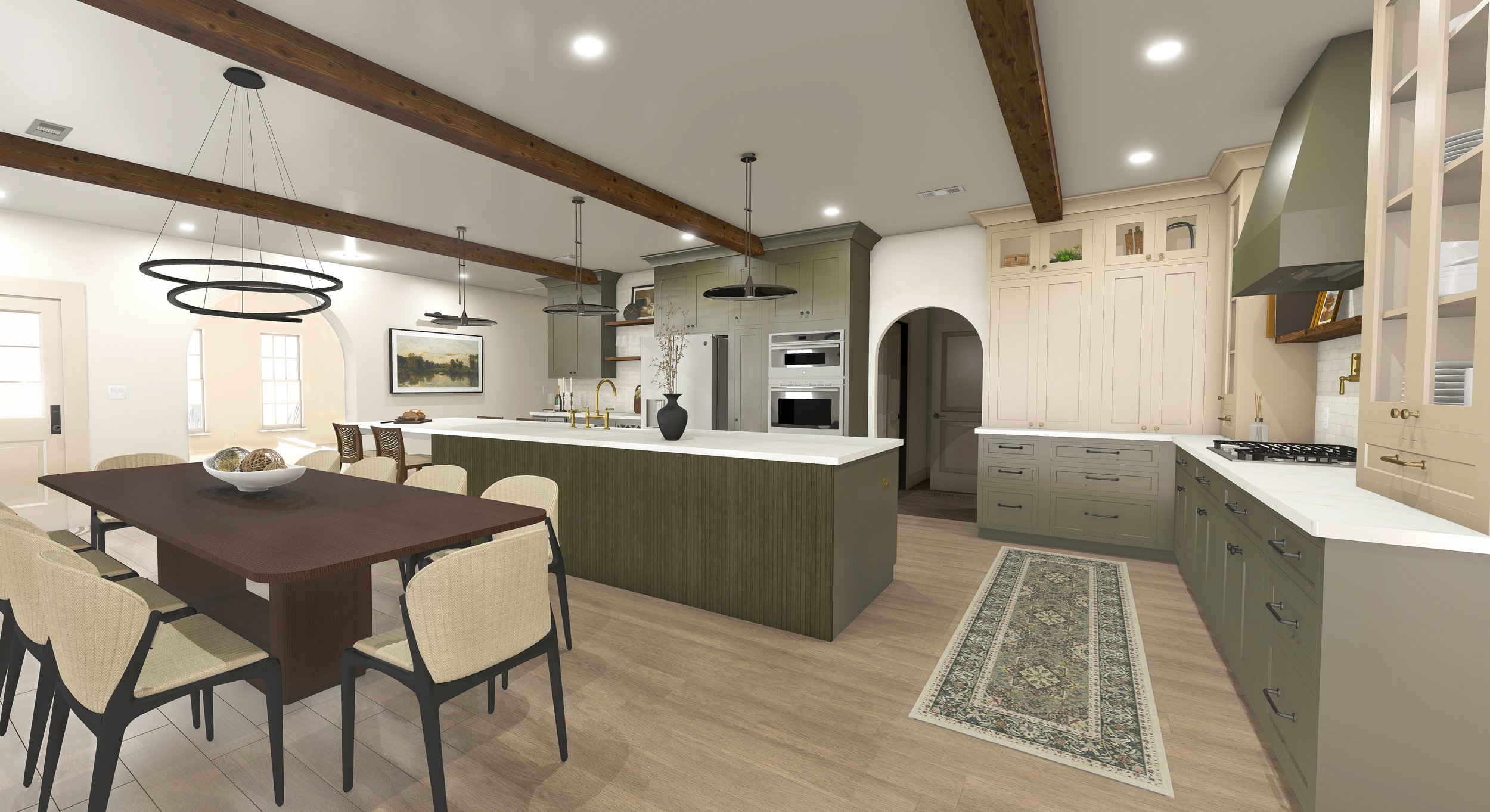
A single island exceeding ten feet in length became the primary organizing element, supporting dining, preparation, and serving without subdividing the room unnecessarily.
3. Gathering would drive the layout.
The plan prioritized shared use over segmented work zones, allowing the kitchen to function as a social center rather than a purely task-oriented space.
4. Material continuity would ground the space.
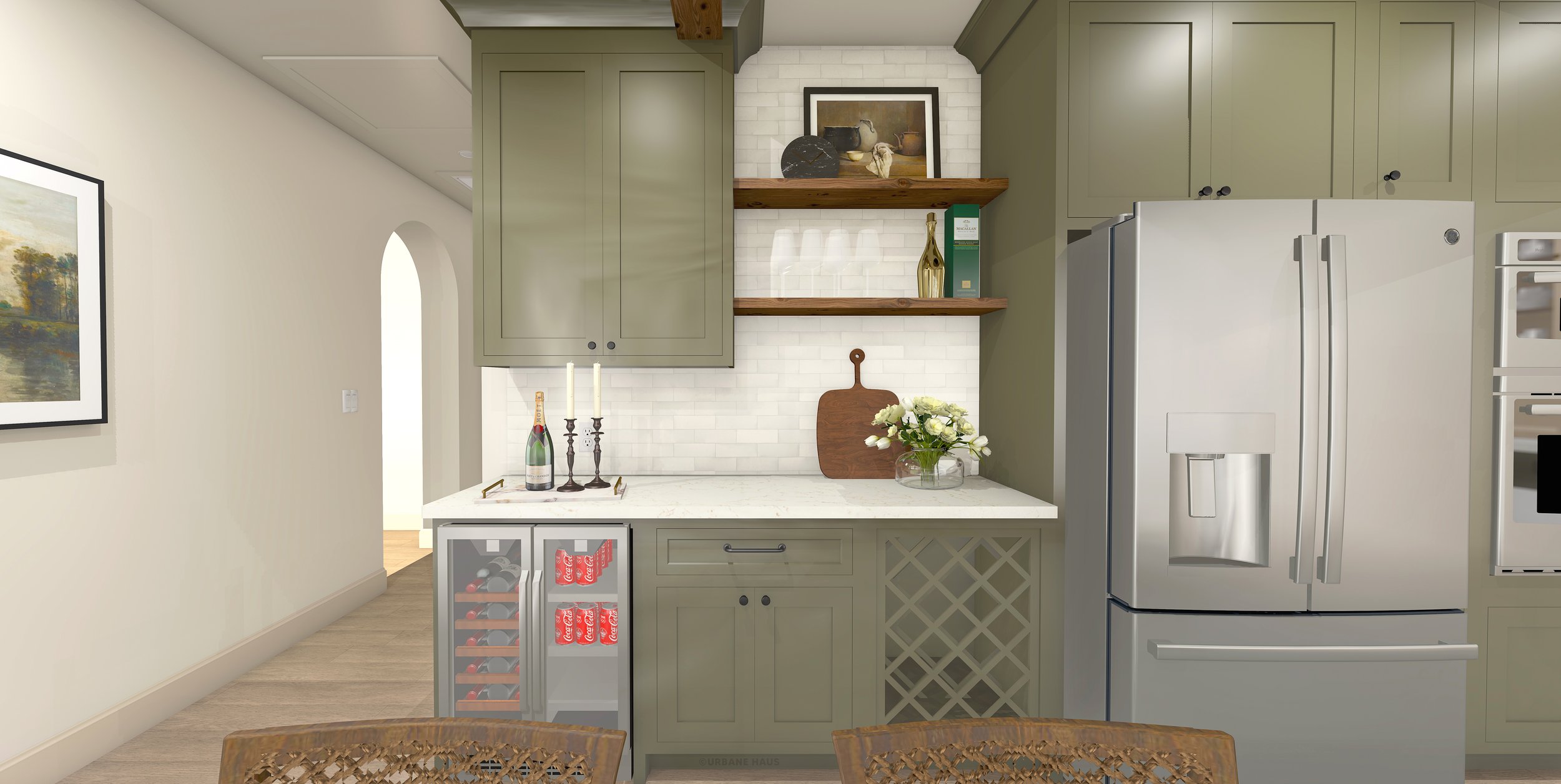
The color palette, silhouettes, and finishes were selected for longevity, reinforcing the sense that the kitchen belongs to the home’s timeline rather than a specific era.
Standards Applied
No layout decisions driven solely by size or novelty
No stylistic references that compete with the home’s age
No materials chosen for trend relevance over endurance
No separation of function that disrupts gathering
No updates that feel temporary within a century-old structure
Outcome
Between Eras presents a kitchen that feels both expansive and grounded. It supports modern use and large-scale gathering without overwhelming the home’s historic framework.
The result is a space that functions as a true heart of the house, offering continuity rather than contrast and allowing family life to unfold within a kitchen that feels timeless, purposeful, and at ease within its setting.



3D TOUR:
CREDITS:
Interior Designer:
Amber Bean-Payton/Urbane Haus
3D Design and Renderings:
Amber Bean-Payton/Urbane Haus