
Urbane Haven
A Study in Contrast, Intimacy, and Spatial Reclamation
Context
In many builder-led homes, additional rooms are introduced to satisfy marketing metrics rather than spatial logic. These spaces often lack intention, clarity, or architectural justification, existing only to increase bedroom counts rather than improve livability.
Urbane Haven originated from one such condition. Positioned at the front of the home near the entry, the room was labeled as a bedroom despite the absence of enclosure or purpose. Its placement and openness rendered it functionally ambiguous and spatially disconnected from the rest of the house.
The Core Problem
The challenge was not to repurpose an unused room, but to correct a misalignment between designation and experience.
Left unresolved, the space diluted the entry sequence and contributed little to the overall rhythm of the home. The question became how to transform a nominal bedroom into a space that added architectural interest, emotional contrast, and functional value within an open-floorplan layout.
The Design Position
This project was guided by the belief that every room must earn its place in a home.
Rather than forcing the space to conform to its original label, the design reclaimed it as an intentional destination. The room would operate as a counterpoint to the openness of the main living areas, offering intimacy, contrast, and a distinct sense of arrival near the front of the house.
Color, scale, and atmosphere were used deliberately to signal a shift in experience rather than continuity for its own sake.
Key Design Decisions
1. The room would be redefined, not relabeled.
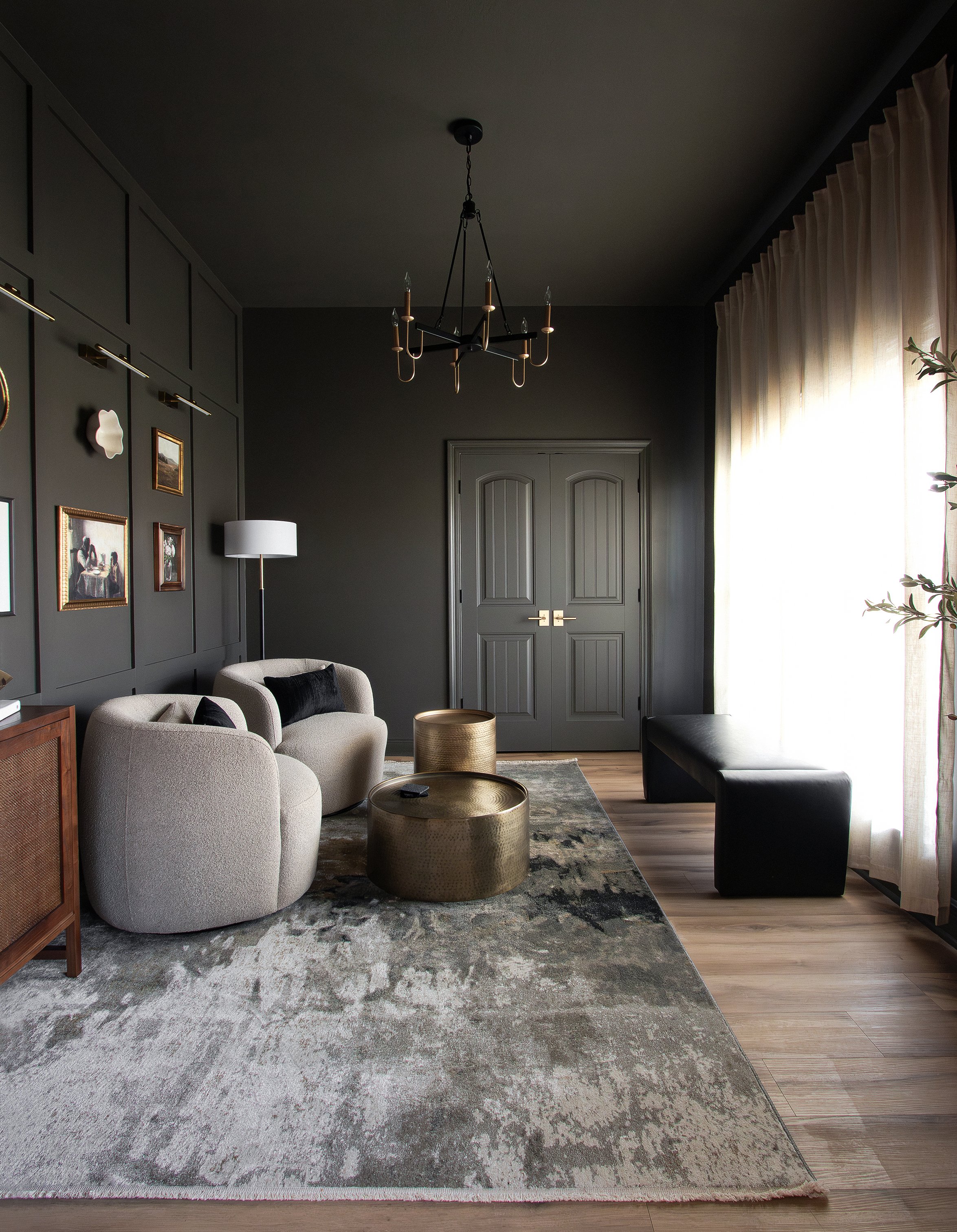
Instead of attempting to complete the illusion of a bedroom, the space was repositioned as a sitting room designed for gathering, conversation, and pause.
2. Contrast would establish identity.
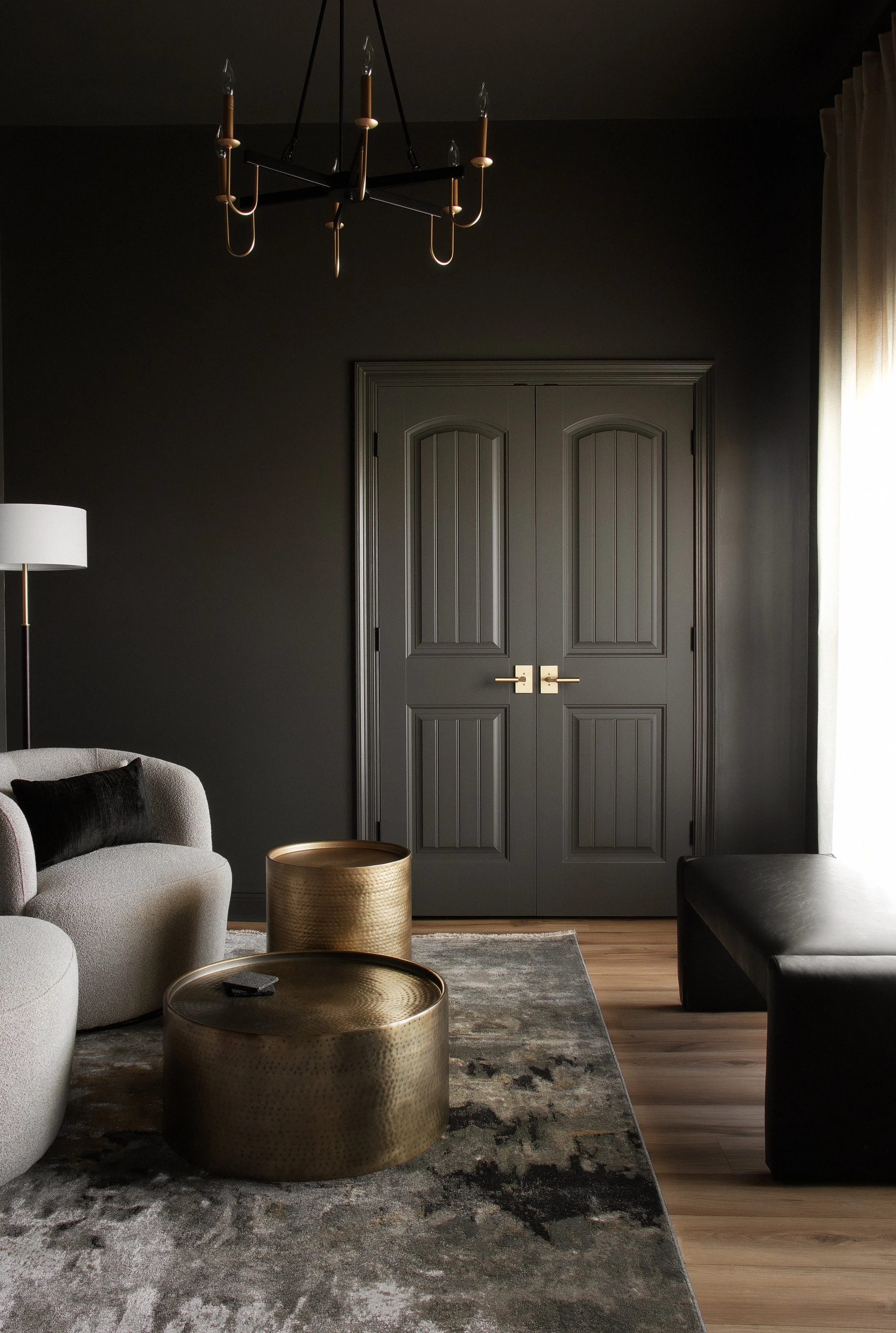
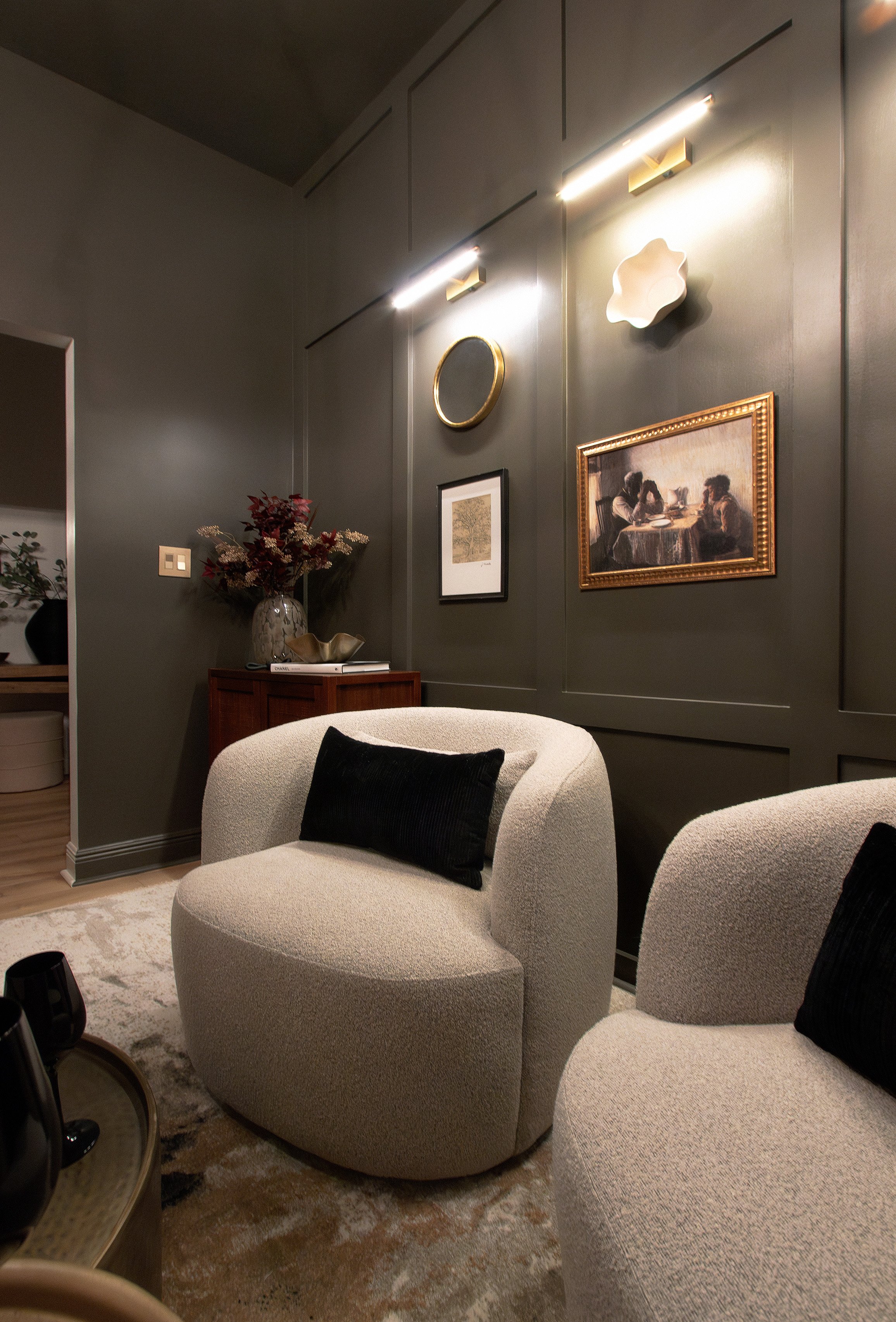
A deeper, more expressive palette was introduced to differentiate the room from the predominantly white and neutral interiors elsewhere in the home, allowing it to function as a visual and emotional anchor.
3. Intimacy would be prioritized over openness.
Furniture placement and scale were selected to encourage closeness and interaction, creating a gathering space more personal than the family room within the open floor plan.
4. The entry experience would be enriched.
By giving the front-facing room a clear purpose and presence, the design strengthened the home’s entry sequence rather than allowing it to dissipate into ambiguity.
Standards Applied
No space without a clearly defined role
No design decisions made solely to satisfy real estate conventions
No forced continuity that flattens spatial experience
No color or contrast without intention
No rooms treated as leftover square footage
Outcome
Urbane Haven transforms a miscategorized space into a moment of clarity and depth within the home. What was once an ambiguous room now functions as an intimate gathering area that complements, rather than competes with, the openness of the main living spaces.
The result is a home with greater rhythm and contrast, where each area contributes meaningfully to how the space is lived in and experienced.



CREDITS:
Design and Execution:
Amber Bean-Payton/Urbane Haus
Photography:
Amber Bean-Payton/Urbane Haus (After Photos)